Enterprise wiki migration: Notion to Confluence
This case study documents an internal project at CoreWeave where some deliverables cannot be publicly shared. The case study presents the challenge, approach, and impact of the initiative. Artifacts included are either anonymized examples or sanitized mockups that preserve confidentiality while demonstrating the scope and structure of the work.
Abstract
Role: Primary information architect
Company: CoreWeave
Timeline: Q3 2025 (engaged May-August)
Challenge
CoreWeave's Notion-to-Confluence migration had stalled in a prolonged pilot phase, with only months remaining before a hard August deadline. The project needed to migrate content for nearly 2,000 users across both personal and team spaces, but lacked clear architecture, migration processes, and leadership to drive completion.
Approach
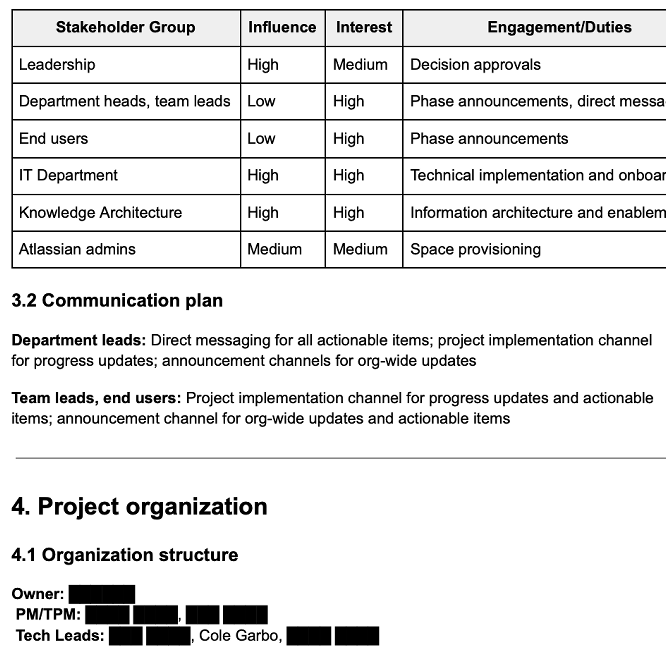
I came onto the project in May and quickly identified what was missing: structured project planning, clear information architecture, and documented migration processes. I established these foundations, coordinated stakeholders, and drove execution to meet the August deadline.
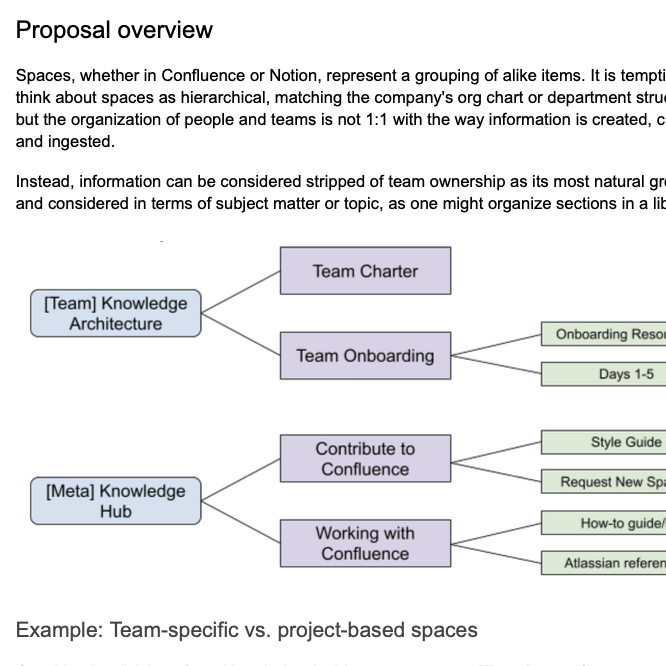
- Architected information hierarchy: Proposed and implemented the organizational structure for over 50 Confluence spaces, defining how content would be categorized and accessed
- Developed migration frameworks: Created processes for space creation, template design, and content rollout that teams could follow independently
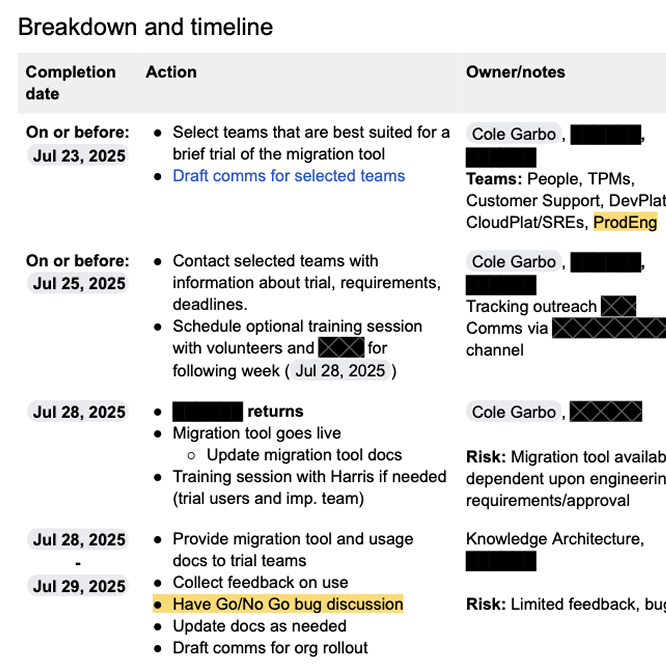
- Led testing initiatives: Designed tightly scoped testing plans and timelines to evaluate migration tools, enabling data-driven decisions
- Performed technical execution: Conducted content migrations requiring IT-adjacent skills that no other team members possessed
- Accelerated delivery: Identified timeline risks in June and prioritized critical migration paths to ensure August completion
Key deliverables
- Information architecture for 50+ Confluence spaces, including plans for discoverability and improved navigation
- Space creation and rollout process documentation
- Confluence template library aligned to organizational needs
- Migration tool testing plans and evaluation criteria
- Content migration execution for critical spaces, including white-glove approaches with high-risk teams
- Transition plan for service continuity and content accessibility
Impact
This project demonstrated how technical writing leadership extends beyond content creation: I brought information architecture thinking, process design, and technical execution to transform a struggling migration into a successful organizational change.
- Successfully migrated the vast majority of content for 2,000 users by the August deadline
- Established sustainable structure that enabled teams to create and manage their own spaces post-migration
- Drove completion of a stalled initiative by establishing structure, coordinating teams, and executing critical technical work
- Identified and mitigated critical risks in the migration plan, including missing backup strategies, inadequate testing protocols, and unaddressed user needs
Artifacts
The following are anonymized samples of work completed for this project: